Introduction
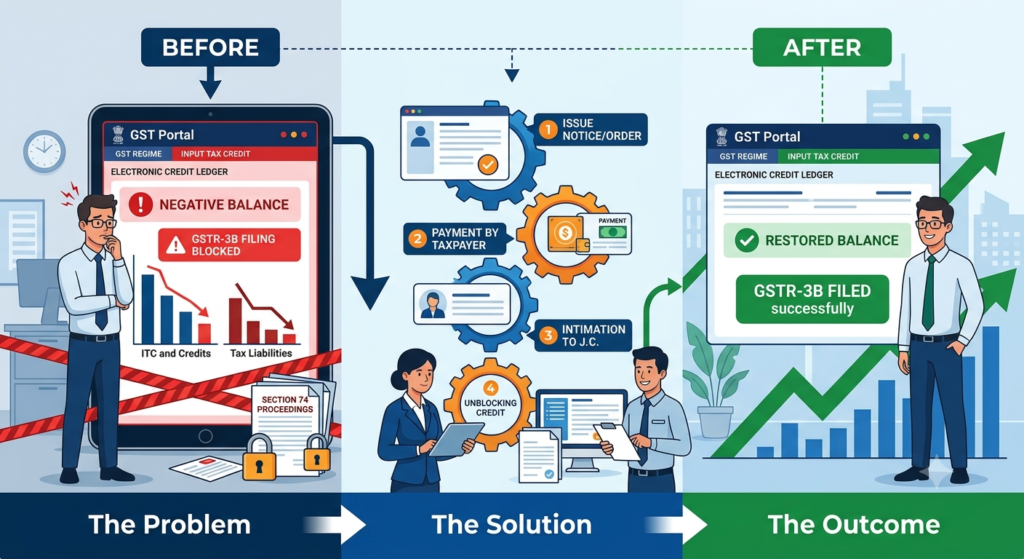
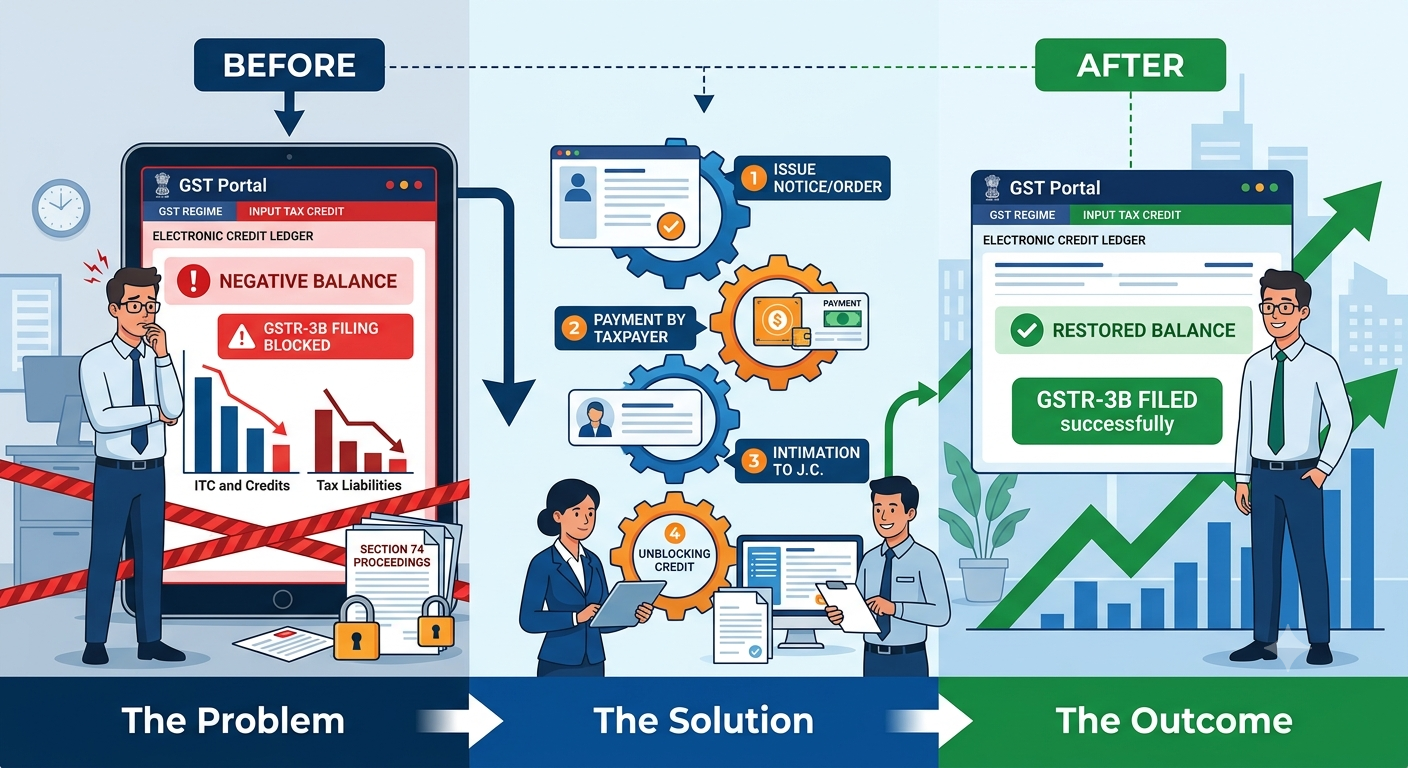
The Goods and Services Tax (GST) regime is built on the seamless flow of Input Tax Credit (ITC). However, in certain cases, the Electronic Credit Ledger (ECL) of a taxpayer may reflect a negative balance due to the blocking or recovery of ITC pursuant to proceedings initiated under Section 74 of the Central Goods and Services Tax Act, 2017. A negative balance in the credit ledger prevents the taxpayer from filing GSTR-3B, resulting in non-compliance and the accumulation of further liabilities.
To address such situations, the following administrative procedure may be adopted to regularize the ledger and restore the taxpayer’s ability to file GSTR-3B.
Circumstances Leading to a Negative Credit Ledger
A negative balance in the Electronic Credit Ledger generally arises when:
- ITC has been blocked or recovered pursuant to proceedings under Section 74 of the GST Act.
- The taxpayer has already utilized the disputed ITC in earlier tax periods.
- Upon adjudication, the tax authority determines that the ITC has been wrongly availed or utilized and adjusts the electronic credit ledger accordingly.
- The system reflects a negative credit balance, preventing the filing of subsequent GSTR-3B returns.
As long as the negative balance remains in the Electronic Credit Ledger, the GST portal does not permit filing of GSTR-3B.
Procedure for Regularization
Step 1: Issue of Notice or Order under Section 74
Where wrongful availment or utilization of ITC is detected, the State Tax Officer shall initiate proceedings under Section 74 of the GST Act by issuing:
- a Show Cause Notice; and
- an adjudication order, wherever applicable,
determining the amount of tax, interest and penalty payable by the taxpayer.
Step 2: Payment by the Taxpayer
The taxpayer shall discharge the liability determined under the notice or adjudication order by making payment through the prescribed mode on the GST portal.
The payment should include:
- Tax;
- Interest, wherever applicable; and
- Penalty, if imposed.
After payment, the liability under the order stands discharged to the extent of the amount paid.
Step 3: Intimation to the Joint Commissioner
After verifying the payment made by the taxpayer, the State Tax Officer shall prepare a report containing:
- GSTIN of the taxpayer;
- details of the notice/order issued under Section 74;
- amount demanded;
- amount paid by the taxpayer;
- confirmation of payment; and
- request for restoration of the blocked credit.
The report shall be forwarded to the jurisdictional Joint Commissioner for necessary administrative action.
Step 4: Unblocking of Credit by the Joint Commissioner
Upon receipt of the report and after verifying that the taxpayer has fully complied with the payment requirements, the Joint Commissioner may initiate the process for restoration or unblocking of the Electronic Credit Ledger, as per the powers and procedures prescribed by the Government and GSTN.
The unblocking of the ledger removes the negative balance that prevents return filing.
Step 5: Filing of GSTR-3B
Once the Electronic Credit Ledger is restored and the negative balance is removed:
- the taxpayer may offset the eligible tax liability;
- proceed with filing the pending GSTR-3B returns; and
- continue regular GST compliance.
Responsibilities of the Authorities
State Tax Officer
The State Tax Officer shall:
- issue the notice or adjudication order under Section 74;
- verify the taxpayer’s payment;
- maintain records of compliance; and
- recommend restoration of the blocked credit to the Joint Commissioner.
Joint Commissioner
The Joint Commissioner shall:
- examine the proposal received from the State Tax Officer;
- verify that the taxpayer has discharged the liability; and
- initiate administrative action for unblocking or restoration of the Electronic Credit Ledger in accordance with the prescribed procedure.
Conclusion
A negative balance in the Electronic Credit Ledger can significantly disrupt GST compliance by preventing the filing of GSTR-3B. Prompt adjudication, timely payment of the demand by the taxpayer, and coordinated administrative action by the State Tax Officer and the Joint Commissioner are essential for restoring the credit ledger and enabling the taxpayer to resume normal compliance.
A standardized procedure for reporting payment, obtaining approval, and unblocking the Electronic Credit Ledger helps ensure transparency, administrative efficiency, and timely restoration of taxpayers’ rights while safeguarding government revenue.