Introduction
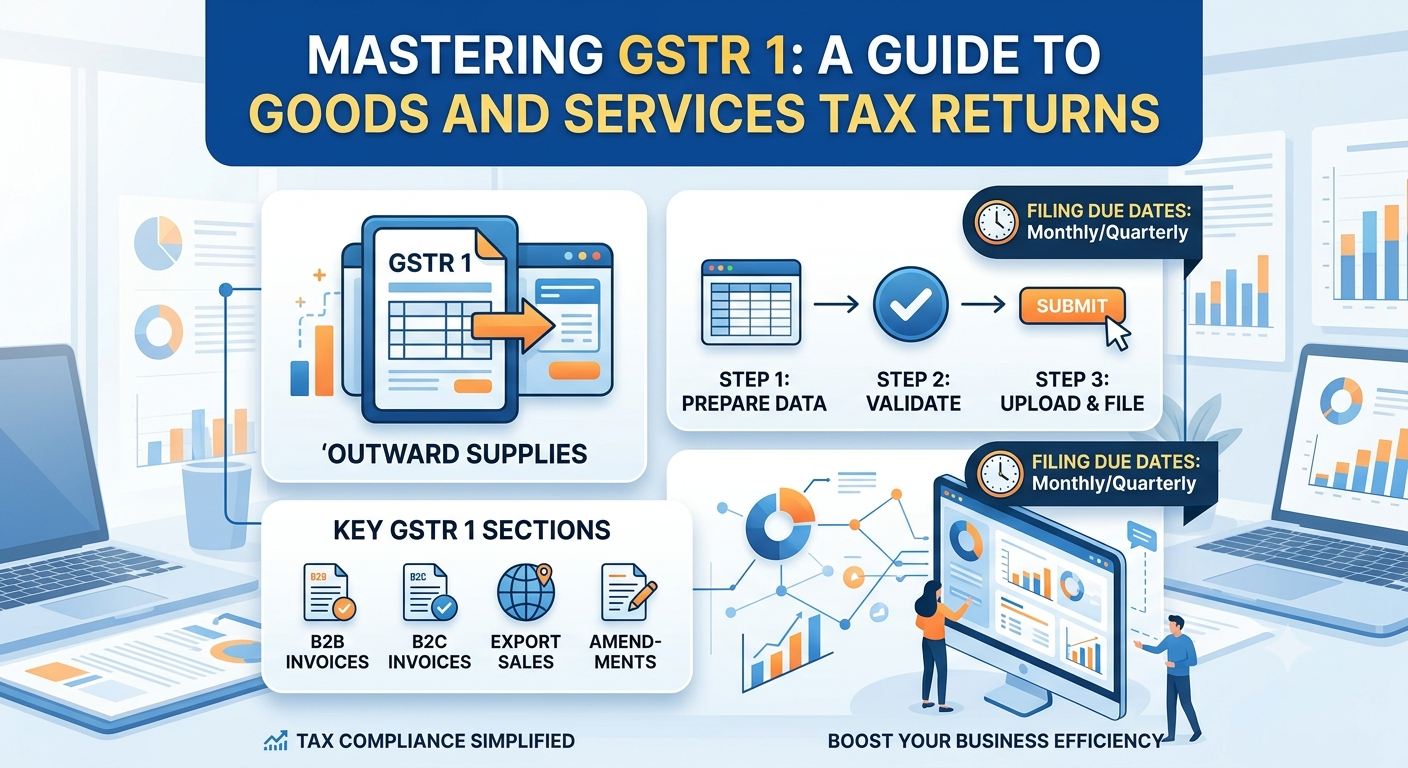
Timely filing of GST returns is essential for maintaining compliance under India’s Goods and Services Tax (GST) regime. One of the most important returns is GSTR-1, which contains details of all outward supplies (sales) made by a registered taxpayer. Missing the GSTR-1 filing deadline can lead to compliance issues and may attract late fees and other consequences. Understanding these provisions helps businesses avoid unnecessary costs and maintain a good compliance record.
What is GSTR-1?
GSTR-1 is a return that contains invoice-wise details of outward supplies of goods and services made during a tax period. It is filed either monthly or quarterly, depending on the taxpayer’s filing frequency under the GST framework.
What Happens if GSTR-1 is Filed Late?
Failure to file GSTR-1 within the prescribed due date can result in:
- Delay in reporting outward supplies.
- Customers being unable to view invoices for claiming Input Tax Credit (ITC) on time.
- Compliance notices from the GST department.
- Late fees, if applicable under GST provisions.
- Disruptions in GST return reconciliation.
GSTR-1 Late Fees
Late fees for delayed filing of GSTR-1 are governed by the GST law and may be notified or revised by the Government from time to time.
Generally, the late fee is calculated on a per-day basis from the due date until the return is filed, subject to the limits prescribed under the applicable notifications.
Taxpayers should always verify the latest late fee structure before filing, as the Government may provide relief through notifications, waivers, or reduced late fees for specific periods.
Is There Any Penalty for Late Filing?
Apart from late fees, delayed compliance may have additional consequences, such as:
- Delayed availability of Input Tax Credit to recipients.
- Increased chances of receiving notices from GST authorities.
- Difficulty in reconciling GSTR-1 with other GST returns.
- Potential legal action in cases of persistent non-compliance, as provided under the GST law.
How to Avoid Late Fees
Businesses can reduce the risk of late filing by following these best practices:
- Maintain updated sales records throughout the month.
- Reconcile invoices before preparing the return.
- File the return several days before the due date.
- Set reminders for monthly or quarterly filing deadlines.
- Use reliable GST accounting software to automate return preparation.
Can Late Fees Be Waived?
The Government may occasionally issue notifications reducing or waiving late fees for specific tax periods or categories of taxpayers. Such relief is not automatic and is available only when officially announced. Taxpayers should regularly monitor GST notifications for any updates.
Best Practices for GST Compliance
To maintain smooth GST compliance:
- File GSTR-1 on or before the due date.
- Verify GSTINs and invoice details carefully.
- Reconcile sales data with accounting records.
- Keep supporting documents organized.
- Monitor GST portal updates and notifications.
Conclusion
Timely filing of GSTR-1 is an important part of GST compliance. Delays can affect customers’ Input Tax Credit, lead to compliance issues, and may result in applicable late fees or other consequences under GST law. By maintaining accurate records, tracking due dates, and filing returns on time, businesses can avoid unnecessary complications and ensure smooth GST compliance.