Type your paragraph here
GSTR-1 Due Date: Everything You Need to Know
Introduction
GSTR-1 is one of the most important GST returns that registered taxpayers in India must file. It contains details of all outward supplies (sales) made during a tax period. Filing GSTR-1 on time ensures that buyers receive accurate Input Tax Credit (ITC) and helps businesses avoid penalties and compliance issues.
What is GSTR-1?
GSTR-1 is a monthly or quarterly return that captures details of taxable sales, exports, debit notes, credit notes, and other outward supplies. Every registered taxpayer liable to file GSTR-1 must furnish accurate invoice-wise information within the prescribed due date.
GSTR-1 Due Date
The due date for filing GSTR-1 depends on the taxpayer’s filing frequency:
Monthly Filers
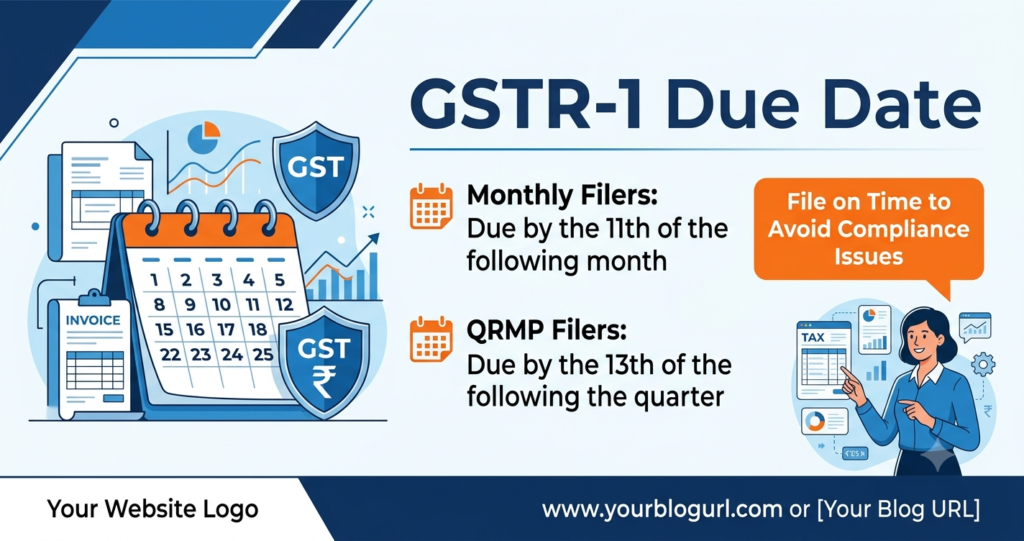
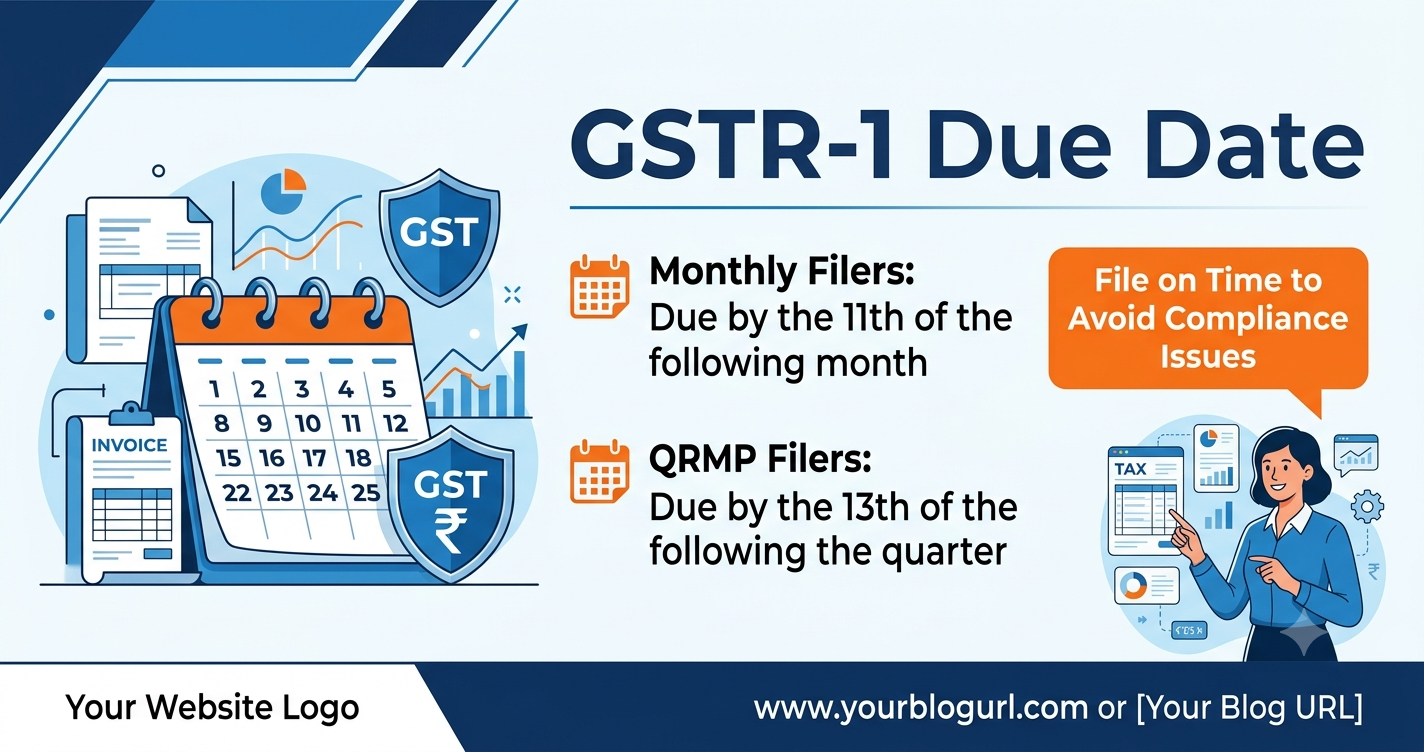
Businesses filing GSTR-1 every month must submit the return by the 11th day of the following month.
Example:
For sales made in July, the GSTR-1 due date is 11th August.
Quarterly Filers (QRMP Scheme)
Taxpayers who have opted for the Quarterly Return Monthly Payment (QRMP) Scheme must file GSTR-1 by the 13th day of the month following the end of the quarter.
Example:
For the April–June quarter, the due date is 13th July.
Why Timely Filing is Important
Filing GSTR-1 within the due date offers several benefits:
Ensures buyers receive Input Tax Credit without delays.
Maintains GST compliance.
Avoids notices from the tax department.
Prevents disruption in business transactions.
Improves the taxpayer’s compliance rating.
Consequences of Late Filing
Missing the GSTR-1 due date can lead to:
Delay in customers claiming Input Tax Credit.
Compliance notices from GST authorities.
Difficulty in reconciling GST returns.
Potential penalties or other legal consequences where applicable under GST law.
Documents Required for Filing GSTR-1
Before filing, keep the following ready:
Sales invoices
Debit and credit notes
Export invoices (if applicable)
HSN-wise summary of goods and services
Details of advances received and adjusted, where applicable
Tips for Timely GSTR-1 Filing
Maintain updated sales records throughout the month.
Reconcile invoices with accounting software regularly.
Verify GSTIN details before uploading invoices.
File well before the due date to avoid last-minute technical issues.
Review the return carefully before submission.
Conclusion
Timely filing of GSTR-1 is essential for every GST-registered business. Whether you file monthly or under the QRMP scheme, meeting the prescribed due date helps ensure smooth GST compliance, enables customers to claim Input Tax Credit promptly, and reduces the risk of notices or penalties. Keeping accurate records and filing on time is a key part of maintaining a healthy tax compliance process.